Selling a House With Back Taxes, Liens, or Judgments in South Carolina
You do not have to pay off back taxes, liens, or judgments before selling. They are paid from the sale proceeds at closing by the closing attorney, which means they reduce what you receive rather than requiring cash you do not have.
What does require attention is the tax sale clock, because that one has a deadline and a redemption period that most owners do not know exists.
Homebuyers SC buys houses with tax arrears and recorded liens across Charleston, Berkeley, and Dorchester counties.
What is the tax sale timeline in South Carolina?
This is the good news that nobody tells delinquent taxpayers: unlike a mortgage foreclosure, a South Carolina tax sale does give you a redemption period.
Under SC Code 12-51-90(A), the defaulting taxpayer may, “within twelve months from the date of the delinquent tax sale,” redeem the property by paying the delinquent taxes, assessments, penalties, and costs, plus interest calculated on when in the period redemption occurs.
Compare that with a mortgage foreclosure, where South Carolina gives no right of redemption after the sale at all. Two different processes, two completely different deadlines. See stopping foreclosure in South Carolina.
Tax sale procedure and redemption are technical and the amounts change with timing. Confirm your specific position with the county treasurer or delinquent tax office and a licensed South Carolina attorney.
The practical consequence: if the property has already been sold at a tax sale, you may still have a window, and selling within it can let you redeem and keep the remaining equity. That window closes.
What attaches to the house?
| Obligation | What it is | How it resolves |
|---|---|---|
| Property tax arrears | Owed to the county. Leads to a tax sale if unresolved | Paid at closing from proceeds |
| Unpaid sewer charges | In South Carolina a lien “superior to all other liens except liens for unpaid property taxes” under SC Code 5-31-2040 and 6-11-1240. It outranks the mortgage | Paid at closing |
| Mortgage | The main payoff | Paid at closing |
| Recorded judgment | A judgment is a lien on real property you own and lasts ten years | Paid at closing |
| Mechanics lien | Under SC Code 29-5-90 it dissolves unless filed within 90 days of last furnishing labor or materials | Paid or negotiated at closing |
| HOA dues and assessments | Typically a lien under the governing documents | Paid at closing |
| IRS or state tax lien | Federal or state | Handled at closing, sometimes with a release process that takes time |
Every one of these is found by the closing attorney’s title search. None of them require you to bring money beforehand, unless the total owed exceeds what the house will sell for.
What about a lawsuit or a judgment against me personally?
Worth separating, because owners assume the worst.
South Carolina does not allow wage garnishment for consumer debt, including credit cards and medical bills. That is unusual and it works in your favour.
What a creditor can do is sue, win, and record the judgment, at which point it becomes a lien on real property you own and lasts ten years. So the house is where the exposure sits, not the paycheck. A recorded judgment is paid from the proceeds at closing like any other lien.
A lawsuit that has not produced a recorded judgment generally does not stop a sale. A claim recorded against the property itself does. See selling a house with ongoing legal disputes.
What does the closing attorney actually do?
In South Carolina every closing is supervised by a licensed attorney. That is settled law from State v. Buyers Service Co., 292 S.C. 426, 357 S.E.2d 15 (1987), decided on consumer protection grounds, and on a property with several creditors it is a genuine protection.
- Orders the title search and identifies every recorded lien and judgment
- Obtains authoritative payoff figures from each
- Lists them on the settlement statement as deductions
- Pays them directly at closing and obtains releases
- Disburses what remains to you
You are not chasing payoff letters and you are not paying anyone in advance.
What if I owe more than the house is worth?
Then a straightforward sale may not close, and the routes change. See selling a house with an underwater mortgage.
Work out the real number first: the payoff statement, not the balance, plus every recorded lien, against a realistic current-condition value.
Why does waiting cost more?
- Interest and penalties accrue on tax arrears, and the tax sale clock runs
- Judgments accrue interest
- Sewer arrears grow, and they outrank your mortgage
- Property taxes and insurance continue, and a house in this position is often also in poor condition
- If the mortgage is also behind, the foreclosure clock runs separately, with no redemption after the sale
Nothing on that list improves on its own.
Frequently asked questions
Do I need to know the exact amounts before getting an offer?
No. Bring what you know. The closing attorney obtains authoritative payoffs, and an estimate is enough to start.
What if the property has already been sold at a tax sale?
You may still be inside the twelve-month redemption period under SC Code 12-51-90. Find out immediately from the county, because that window closes.
Can the buyer pay the taxes for me?
That is what happens, in effect. They come off the proceeds at closing rather than out of your pocket beforehand.
What about an IRS lien?
It is handled at closing and the release process can add time. Tell the closing attorney early so it is not discovered late.
Will liens lower my price?
They reduce your net by their amount, not the price of the house. The exception is a lien that signals something else, such as a mechanics lien pointing at unfinished work.
How fast can it close?
Usually one to three weeks once payoff figures are in hand. Assembling payoffs across several creditors is normally what sets the pace. See how fast can I sell my house in South Carolina.
Need to sell this house?
We buy houses across Charleston, Berkeley, and Dorchester counties for cash, exactly as they sit. No repairs, no cleaning, no commissions, and you choose the closing date.
We buy houses across the Lowcountry, including Charleston, North Charleston, Mount Pleasant and Summerville.
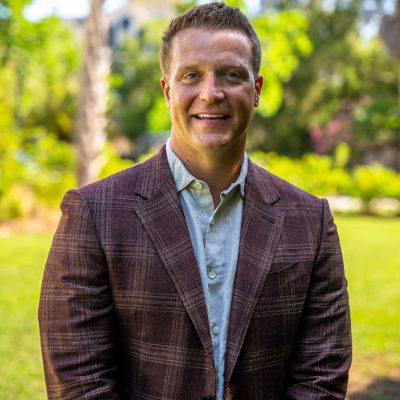
Caleb Pearson is the founder of Homebuyers SC and a licensed South Carolina real estate agent (License #83101) with 15+ years of real estate investing experience. He has personally been involved in over 500 purchases across South Carolina.