Are Cash Home Buyers Legitimate? How to Check, in South Carolina
Most cash home buyers operating in South Carolina are real businesses. The useful distinction is not legitimate versus fraudulent, it is direct buyer versus wholesaler versus lead reseller, because all three use the same marketing and only one of them is actually buying your house.
Three checks separate them, and all three fit in one phone call.
Homebuyers SC is a direct buyer and has completed over 500 purchases across Charleston, Berkeley, and Dorchester counties since 2017.
The three questions that settle it
- “Will you be the buyer on the contract, closing in your own name, or do you intend to assign this contract to someone else?” A direct buyer answers immediately. A wholesaler talks about their “network of buyers” or “investor list.” Both answers are useful, as long as you get a straight one.
- “Can you send proof of funds?” A bank statement or a letter from a financial institution. A real buyer has it ready.
- “Which closing attorney will you use?” In South Carolina this is not optional, and the answer tells you a great deal.
Why does the closing attorney question work so well?
Because South Carolina is one of the states where it is not a matter of preference.
In State v. Buyers Service Co., 292 S.C. 426, 357 S.E.2d 15 (1987), the South Carolina Supreme Court held that real estate closings must be conducted under the supervision of a licensed attorney, on consumer protection grounds.
So a buyer who is vague about who is handling the closing, or who talks about an out-of-state title company, is either unfamiliar with how South Carolina works or routing you somewhere worth asking about. Established local buyers use established local closing attorneys and name them without hesitation.
What are the three kinds of business?
| Type | What they do | What it means for you |
|---|---|---|
| Direct buyer | Buys with their own funds, holds or renovates, resells later | One party, one price, they control whether it closes |
| Wholesaler | Puts your house under contract, then sells that contract to a third party for a fee | The real buyer is someone you have not met. Deals fail when nobody takes the assignment |
| Lead reseller | Collects your information and sells it to several investors | Your phone starts ringing. Nobody has committed to buying anything |
None of these is illegal. Wholesaling is a legitimate business. The problem is being told you are dealing with one and actually dealing with another.
How do I verify what someone tells me?
All of this is free and public in South Carolina.
| What to check | Where | What you learn |
|---|---|---|
| Have they actually bought houses here? | County Register of Deeds records | Whether recorded deeds match the volume they claim |
| Real estate license, if claimed | SC Department of Labor, Licensing and Regulation licensee lookup | Whether it is real and active |
| Residential builder license, if they claim to renovate | LLR, Residential Builders Commission. A license is required for residential work over $5,000 | Whether it is real, plus any Board Orders |
| Business standing | Better Business Bureau | Accreditation, rating, complaint history |
| Reviews | Google Business Profile, and read the less positive ones | How they behave when something goes wrong |
| Company registration | SC Secretary of State business filings | Whether the entity exists and how long it has |
For reference, Homebuyers SC, LLC is BBB accredited with an A+ rating held since March 2023, holds a 4.8 out of 5 rating from 25 Google reviews, and founder Caleb Pearson is a licensed South Carolina real estate agent, license number 83101. Those are stated so you can check them. Our reviews page lists where each figure comes from.
What are the actual warning signs?
- Pressure to sign today. A real offer is still a real offer tomorrow.
- A large deposit requested from you. You are the seller. You should not be paying the buyer anything.
- Vagueness about who is buying. See question one.
- No physical address, or an out-of-state address with no local presence.
- Being asked to sign before seeing the whole contract, including what happens if the buyer walks.
- An offer that drops late, repeatedly. Renegotiating on something genuinely discovered is normal. A pattern is not.
- Anyone asking you to sign over the deed in exchange for a promise to save your house from foreclosure. This is how equity gets taken.
That last one matters most if you are behind on payments. See stopping foreclosure in South Carolina.
Is a cash offer worth less than listing?
Yes, and any buyer telling you otherwise is not being straight with you.
A cash offer is below what a renovated house would fetch on the open market. That difference is what you trade for speed, no repairs, no showings, no commission, and a sale that closes. Whether that trade is worth it depends entirely on your situation, and sometimes it is not.
It is usually worth it when the house needs work you cannot fund, you are on a deadline, the property is tenant-occupied or inherited, or a failed listing has already cost you months. It is usually not worth it when the house is in good condition, you are not in a hurry, and a lender would finance it today. In that case, list it.
The arithmetic is in cash offer vs listing with an agent in Charleston, and the questions to ask any buyer are in how to choose a cash home buyer in Charleston.
Frequently asked questions
How do I know the offer is reasonable?
Ask the buyer to show the arithmetic: what they think the house is worth renovated, what they estimate the repairs cost, and what margin they are keeping. A buyer who will not show that is asking you to trust a number you cannot check.
Should I get more than one offer?
Yes. Any buyer who discourages that has told you something about themselves.
Do I have to pay anything?
On a straightforward cash purchase the buyer covers closing costs and there is no commission. If you are asked to pay a fee to receive an offer, stop.
What if my house has a tenant, code violations, or is in probate?
Common, and none of them prevent a sale, though they change the timeline. See selling a house with tenants in South Carolina, code violations, and selling an inherited house in probate.
How long does a cash sale take in South Carolina?
Usually one to three weeks once the closing attorney confirms clear title. See how fast can I sell my house in South Carolina.
Need to sell this house?
We buy houses across Charleston, Berkeley, and Dorchester counties for cash, exactly as they sit. No repairs, no cleaning, no commissions, and you choose the closing date.
We buy houses across the Lowcountry, including Charleston, North Charleston, Mount Pleasant and Summerville.
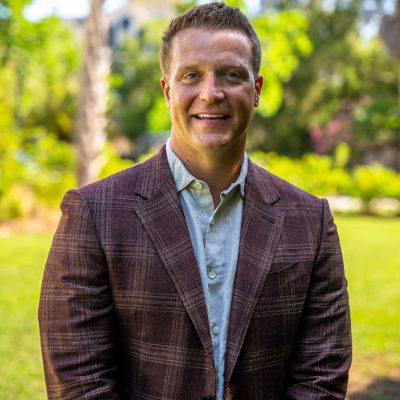
Caleb Pearson is the founder of Homebuyers SC and a licensed South Carolina real estate agent (License #83101) with 15+ years of real estate investing experience. He has personally been involved in over 500 purchases across South Carolina.