
Selling a House With Code Violations in South Carolina
An open code enforcement case does not stop you from selling. It stops you from ignoring the problem, because in many jurisdictions the penalties accrue while the property sits and they follow the property rather than you personally.
The instinct is to fix everything first. For most owners in this position that is the expensive route, because the citations arrived alongside condition problems that cost more than the fines.
Homebuyers SC buys houses with open code cases across Charleston, Berkeley, and Dorchester counties.
What is the standard being enforced?
South Carolina mandates a statewide building code. Under SC Code 6-9-50, local governments must adopt by reference the latest editions of the nationally recognized International Code Council codes for building, residential, gas, plumbing, mechanical, fire, and energy, plus the National Electrical Code. Administrative provisions, including a building official’s duties and procedures, apply where the local governing body has adopted them.
So the technical standard is broadly consistent across the tri-county area. What varies by jurisdiction is enforcement practice, the penalty schedule, and how a case is closed out. Those are questions for the specific code enforcement office, and calling them is free.
What typically generates a citation?
- Structures in disrepair, a failing roof, or an unsafe condition
- Overgrown lots, debris, or accumulation visible from outside
- Unpermitted work discovered by complaint or inspection
- Inoperable vehicles, or storage that violates an ordinance
- Occupancy problems, including unpermitted units
- Utilities disconnected in a way that renders a dwelling unfit
- Anything triggered by a neighbour complaint, which is the most common origin
Why does waiting cost more than the fines?
| What accrues | Why |
|---|---|
| Per-day penalties | Many jurisdictions assess daily on an open case |
| Escalation | Cases can progress toward hearings, liens, or in serious situations demolition orders |
| Condition | The underlying problem gets worse, especially in this climate |
| Insurance | An open case and a deteriorating property make coverage harder, and no insurance means no mortgage |
| Property taxes | Continue, and possibly at the 6% ratio rather than 4% if you no longer occupy it |
| Buyer pool | Narrows as the condition worsens |
An unresolved case on a deteriorating house is the clearest example of a problem that compounds in two directions at once.
Do the violations transfer to the buyer?
Generally the obligations attach to the property, which is the point: a buyer takes the property with the open case and resolves it. That is a normal transaction for an investor buyer and an impossible one for most retail buyers, because their lender will not accept it.
What you should establish before selling:
- Exactly what is cited, in writing, from the enforcement office
- What penalties have accrued to date, and whether any have been recorded as a lien
- What closing the case requires, specifically
- Whether any deadline or hearing is scheduled
How a particular case transfers, and what liability survives a sale, depends on the ordinance and the facts. Ask a licensed South Carolina attorney rather than assuming.
Should I fix it first?
| Fix first when | Sell as-is when |
|---|---|
| The citation is one bounded item, like a yard or debris | The citations reflect broad condition problems |
| Clearing it restores financeability | The house would not finance even with the case closed |
| You can fund it without borrowing | You cannot fund the underlying repairs |
| There is no deadline pressure | A hearing or escalation is scheduled |
| You intend to list the house | You want out |
A mowed lot and a cleared driveway are cheap and sometimes close a case entirely. A structural citation is a different conversation, and the fine is the smallest part of it.
See do I need repairs before selling as-is and selling a house no lender will finance.
What if the case involves zoning or use rather than condition?
Different problem with a different answer. A use that was never permitted, versus a legal nonconforming use that predates the current rules, are handled very differently, and many owners assume they have the worse of the two when they do not.
See selling a property with zoning or use issues and selling a house with unpermitted work.
How does an as-is sale work?
The buyer prices the citations, the underlying condition, and the cost of closing the case. Accrued penalties and any recorded lien are paid from the proceeds at closing by the closing attorney, who in South Carolina must supervise the closing under State v. Buyers Service Co., 292 S.C. 426, 357 S.E.2d 15 (1987).
Disclose the case up front. It is a matter of public record, a buyer’s attorney finds it, and a buyer who is surprised renegotiates. See how to choose a cash home buyer in Charleston.
Frequently asked questions
Can I sell with an open case?
Yes, to a buyer who can close without a lender. Disclose it and let them price it.
Will the fines have to be paid at closing?
Anything recorded as a lien is paid from the proceeds. Unrecorded accrued penalties are a negotiated term, so establish the number before contracting.
What if the property has been cited for years?
Then the accrued total may be significant and the condition is likely serious. Get the written total from the enforcement office before you talk to buyers, because a buyer guessing will guess high.
What if it is an inherited property?
The estate deals with the case, and the authority-to-sell question comes first. See the heir’s checklist.
Could the property be condemned or demolished?
In serious cases jurisdictions have that authority. If a demolition process has started, treat it as urgent and get an attorney involved.
How fast can it close?
Usually one to three weeks once the closing attorney confirms clear title and the penalty figures are known.
Need to sell this house?
We buy houses across Charleston, Berkeley, and Dorchester counties for cash, exactly as they sit. No repairs, no cleaning, no commissions, and you choose the closing date.
We buy houses across the Lowcountry, including Charleston, North Charleston, Mount Pleasant and Summerville.
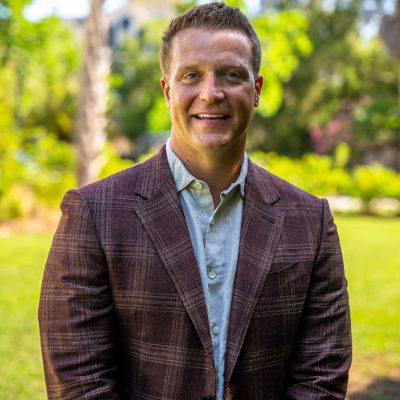
Caleb Pearson is the founder of Homebuyers SC and a licensed South Carolina real estate agent (License #83101) with 15+ years of real estate investing experience. He has personally been involved in over 500 purchases across South Carolina.