Selling a Property With Zoning or Use Problems in South Carolina
A zoning problem is not one problem. It is two, and they behave completely differently at a closing.
A legal nonconforming use is something that was lawful when it started and no longer conforms because the rules changed around it. It generally continues, subject to local conditions. A use that was never permitted is a different matter, and it is the one that stops sales.
Finding out which you have is the first job, and it is free. Homebuyers SC buys properties with zoning and use issues across Charleston, Berkeley, and Dorchester counties.
What kinds of problems are these?
- A nonconforming use: a duplex in an area later zoned single-family, a shop on a lot later zoned residential
- A nonconforming structure: a building that encroaches on a setback that did not exist when it was built
- An unpermitted conversion: a garage turned into a rental unit, a house split into apartments
- A short-term rental operating where the ordinance does not allow it, or without the required local registration
- An accessory dwelling that does not meet current rules
- A lot that cannot be built on, or cannot be subdivided as the owner assumed
- An open code enforcement case about any of the above
The first two can usually be sold with disclosure and documentation. The rest need a real answer before a buyer will price them.
How do I find out which one I have?
All of this is public, and it costs nothing but time.
| What to ask for | Where | What it tells you |
|---|---|---|
| Current zoning for the parcel | County or city planning and zoning department | What is allowed today |
| Whether the use is recognized as legal nonconforming | Same office | The single most valuable answer you can get |
| Permit history for the address | The building department | Whether structures and conversions were permitted |
| Open code enforcement cases | Code enforcement | What is already on the record and accruing |
| Recorded documents | County Register of Deeds | Easements and restrictions affecting use |
| Any private restrictions | Recorded covenants, or the HOA | These bind independently of zoning |
That second row is the one to push for. A planning department confirming in writing that a use is recognized as legal nonconforming changes the property from an unknown into a known, and buyers pay differently for the two.
Zoning determinations are local, fact-specific, and can turn on documents in a file you have not seen. Confirm anything important with the jurisdiction in writing, and with a licensed South Carolina attorney before you rely on it.
Why does this stop a financed sale?
Because a lender is lending against a use it can verify.
- Appraisal. An appraiser values the property as it is legally permitted to be used. Income from a unit that cannot legally exist does not count, and the value follows.
- Insurance. Carriers ask what the property is used for. An answer that does not match the zoning is a problem for coverage, and no insurance means no loan.
- Lender conditions. Some loan programs will not fund a property with an unresolved nonconformity or an open enforcement case.
- The buyer’s own risk. They inherit the exposure, and their attorney will say so.
Meanwhile an open enforcement case can accrue penalties the whole time. See selling a house with code violations and selling a house with code violations.
Can I fix it before selling?
Sometimes, and the routes differ in cost and certainty.
| Route | What it involves | Honest odds |
|---|---|---|
| Document an existing legal nonconforming use | Records, affidavits, a determination letter from the jurisdiction | Often the best value per hour spent |
| Apply for a variance | Application, hearing, standards you must meet | Uncertain, and standards are strict |
| Apply to rezone | Longer process, public hearings, political | Slow and uncertain |
| Permit the work retroactively | Inspections, bringing work to current code, opening walls | Depends entirely on the work |
| Remove the nonconforming use | Convert it back, stop the activity | Certain, and it destroys whatever value the use added |
The first row is underused. Many owners assume they have an illegal use when they actually have a legal nonconforming one that nobody has ever documented.
How does an as-is sale work here?
The buyer prices the uncertainty. What raises the price is documentation: the zoning designation, the determination letter if you obtained one, the permit history, the status of any enforcement case.
What lowers it is a buyer having to guess, or discovering something after the contract. A surprise in this category is expensive because it can go to the usability of the property rather than just its condition.
In South Carolina the closing must be supervised by a licensed attorney, from State v. Buyers Service Co., 292 S.C. 426, 357 S.E.2d 15 (1987). Ask any buyer which closing attorney they use. See how to choose a cash home buyer in Charleston.
Frequently asked questions
Is a legal nonconforming use lost if the property sells?
Generally it attaches to the property rather than the owner, but local ordinances commonly include conditions, such as loss after a period of discontinuance or after damage above a threshold. Ask the jurisdiction about your specific ordinance.
What if I have been operating this way for years?
Time alone does not make a use legal. What matters is whether it was lawful when it began and whether the jurisdiction recognizes it now.
Does a zoning problem have to be disclosed?
SC Code 27-50-40 requires a residential property condition disclosure statement covering categories that include zoning restrictions, and lets an owner indicate actual knowledge or make no representation. SC Code 27-50-30 exempts certain transfers. Ask your closing attorney what applies to your sale.
What about short-term rental rules?
Local, and they change. Charleston-area jurisdictions differ considerably. Get the current rule from the jurisdiction rather than from anything written a year ago, including this.
How fast can a cash sale close?
Usually one to three weeks once the closing attorney confirms clear title. Zoning questions affect the price rather than the closing timeline. See how fast can I sell my house in South Carolina.
Need to sell this house?
We buy houses across Charleston, Berkeley, and Dorchester counties for cash, exactly as they sit. No repairs, no cleaning, no commissions, and you choose the closing date.
We buy houses across the Lowcountry, including Charleston, North Charleston, Mount Pleasant and Summerville.
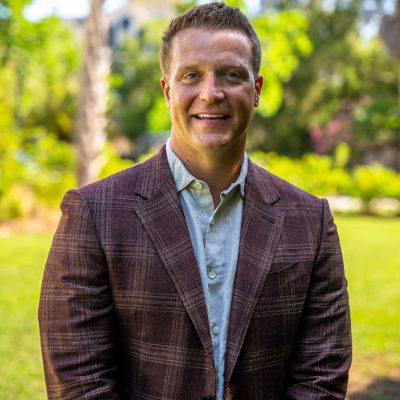
Caleb Pearson is the founder of Homebuyers SC and a licensed South Carolina real estate agent (License #83101) with 15+ years of real estate investing experience. He has personally been involved in over 500 purchases across South Carolina.