
Selling a House After a Renovation Went Wrong in South Carolina
The hardest part of selling a renovation that went wrong is not the house. It is accepting that the money already spent is spent, and that the question in front of you is only about what happens from here.
The money is gone whether you finish or sell. The decision is whether finishing costs less than the difference it makes to the price, and for most stalled renovations it does not.
Homebuyers SC buys houses mid-renovation across Charleston, Berkeley, and Dorchester counties.
Why do renovations stall?
- The budget ran out, usually because the scope grew once walls opened
- The contractor left, was fired, or lost their crew. See selling a house after a contractor walked off the job
- Permits were not pulled, and the work stopped when that surfaced
- Something was discovered: structure, rot, wiring, water
- Life changed: a job, a divorce, an illness, a move
- The design changed mid-project, which is its own expensive category
The reason matters only because it tells the buyer what they are walking into. All six end in the same place: a house that will not finance.
Why will a lender not finance a half-finished house?
| What stops it | Why |
|---|---|
| Missing or disconnected systems | Many loan programs require functioning heat, electrical, and plumbing |
| Open walls or unfinished structure | An appraiser cannot value it and an inspector cannot complete a report |
| Open permits | They show in the record and generally have to be resolved |
| Insurance | Carriers are cautious about a property under construction, particularly if vacant |
| Unknown scope | Nobody knows what is behind unfinished work until it is opened further |
That last row is what actually sets your price. A buyer prices completion plus discovery risk, and discovery risk is the expensive half.
Should I finish it?
Price the finish honestly before deciding, and get real quotes rather than estimating.
| Consideration | Reality |
|---|---|
| A new contractor | Many will not take over another’s unfinished work. Those who will price the risk |
| Scope | The second contractor will want to open up the first one’s work |
| Permits | Existing permits may need transfer, revision, or reinspection |
| Cost | Higher than the original quote, routinely |
| Financing the finish | Difficult, since the security is the unfinished house |
| Time | Longer than quoted, and you carry the house throughout |
| Value at the end | A finished house, at a price that still reflects what buyers now know |
Finishing makes sense when the remaining work is genuinely bounded, you can fund it without borrowing against the house, and completion restores financeability on a property worth materially more finished than as it stands. Otherwise you are funding a project to sell a house you have already decided to leave.
What about liens and the permit record?
Two things to check before you talk to buyers.
Liens. Under SC Code 29-5-90, a South Carolina mechanics lien “shall be dissolved unless” the claimant serves and files within “ninety days after he ceases to labor on or furnish labor or materials.” If a contractor or supplier threatened a lien long ago and never filed, there may be nothing recorded. If one was filed, the closing attorney’s search finds it and it is paid or negotiated at closing.
Permits. An open permit pulled and never closed out shows in the building department record. It is generally easier to resolve than work with no permit at all, because the application already exists. See selling a house with unpermitted work.
Lien rights, deadlines, and any claim against a contractor are fact-specific. Talk to a licensed South Carolina attorney rather than relying on the outline here.
What should I hand a buyer?
The difference between a good offer and a poor one on a stalled renovation is almost entirely documentation.
- The contract, change orders, and what you paid to whom
- Permits pulled and their current status
- Plans and specifications if they exist
- Inspection records for anything already approved
- Photographs of what is behind the walls before they were closed up
- What was discovered and stopped the job
- Any lien notices received
- Whether subcontractors were left unpaid
A buyer handed this prices the known. A buyer without it prices the worst case, and the gap between those two numbers is usually larger than the documents took to assemble.
In South Carolina the closing must be supervised by a licensed attorney, from State v. Buyers Service Co., 292 S.C. 426, 357 S.E.2d 15 (1987). See how to choose a cash home buyer in Charleston.
Frequently asked questions
Will I get back what I put in?
No. Some of the work has value to a buyer and some does not, and work that has to be redone has negative value. The comparison worth making is against finishing plus more months of carrying costs, not against what you have already spent.
What if I did the work myself?
Say so. Owner-done work is priced more conservatively because a buyer cannot assume it was inspected, and hiding it does not survive a walkthrough.
What if the house is not livable right now?
Not an obstacle for a cash sale. Access for a walkthrough is generally all that is needed.
What if the renovation exposed something serious?
Structure, rot, or water. Those are priced rather than disqualifying. See selling a property that needs a full gut rehab and selling a house with structural movement issues.
Do I have to disclose the unfinished work?
It is visible, so the question is really about what you know beyond what is visible. Disclose that. Ask your closing attorney what your obligations are.
How fast can it close?
Usually one to three weeks once the closing attorney confirms clear title. Liens are what most often add time.
Need to sell this house?
We buy houses across Charleston, Berkeley, and Dorchester counties for cash, exactly as they sit. No repairs, no cleaning, no commissions, and you choose the closing date.
We buy houses across the Lowcountry, including Charleston, North Charleston, Mount Pleasant and Summerville.
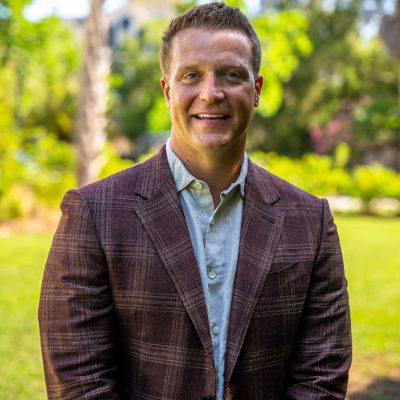
Caleb Pearson is the founder of Homebuyers SC and a licensed South Carolina real estate agent (License #83101) with 15+ years of real estate investing experience. He has personally been involved in over 500 purchases across South Carolina.