
Selling a House After Storm or Flood Damage in South Carolina
You can sell a storm-damaged house in South Carolina without repairing it. Before you do, settle one question: what happens to the insurance claim. That is the thing most likely to go wrong, and it is far easier to handle before a contract than after.
Homebuyers SC buys storm and flood damaged property across Charleston, Berkeley, and Dorchester counties.
What happens to my insurance claim if I sell?
Ask your carrier and your closing attorney this directly, early, because the answer depends on your policy and your situation.
The general shape of it:
- Your mortgage lender is usually involved. On a financed house, the lender is typically named on claim payments for structural damage and has to endorse the check, and lenders commonly release funds in stages as repairs progress rather than in a lump sum.
- Claim proceeds and the sale can be handled separately or together. Whether you keep the proceeds and sell for less, or assign the claim to the buyer, is a term of the deal. Decide it deliberately.
- An open claim is not a reason you cannot sell. It is a reason to have it documented.
- Do not spend claim money on something else if the lender is holding or tracking it.
How claim proceeds are treated in a sale depends on your policy, your mortgage, and your circumstances. Confirm with your carrier, your servicer, and a licensed South Carolina attorney before committing to anything.
What does the damage do to the sale?
| Damage | Effect on a financed buyer |
|---|---|
| Roof | Often stops the loan outright, and stops insurance, which stops the loan anyway |
| Structural or framing | The lender’s collateral is compromised. Loan declined or conditioned on repair |
| Water intrusion and resulting mold | Frequently a repair requirement before funding |
| Flood damage | Adds the flood zone and elevation question on top of the condition |
| Damaged systems | Many loan programs require functioning heat, electrical, and plumbing |
| Cosmetic only | Usually manageable |
The compounding problem here is insurance, and in the Lowcountry it is more acute than most places.
Why does insurance become the real obstacle here?
Because coastal South Carolina has a narrower market than most of the country, and a damaged house can fall outside it.
The South Carolina Wind and Hail Underwriting Association, usually called the Wind Pool, exists as a market of last resort for wind and hail coverage in designated coastal zones of Beaufort, Charleston, Colleton, Georgetown, and Horry counties, for owners who cannot obtain that coverage from a regular carrier.
Two things about it that matter to a seller:
- It covers wind and hail only. Not fire, not liability, not flood. Flood is separate coverage regardless.
- It has condition requirements, including a sound roof and code compliance.
So a storm-damaged house with a compromised roof can be in the position of being unable to get private coverage and not qualifying for the last-resort program either. No insurance means no mortgage, which means no retail buyer. Confirm current eligibility and requirements with an insurance agent or the South Carolina Department of Insurance rather than with an article.
See selling a house you cannot insure anymore and selling an uninsurable house.
Should I repair first or sell as-is?
| Repair, then sell | Sell as-is | |
|---|---|---|
| Cash needed | Deductible, plus whatever the claim does not cover | None |
| Time | Contractor availability after a regional storm is the binding constraint | 1 to 3 weeks |
| Certainty of scope | Low. Water damage in particular grows once opened | Buyer’s problem |
| Insurance during repair | Possible gaps, and vacancy issues | Ends at closing |
| Result | A repaired house that is still disclosable as damaged | Done |
The contractor row is the one people underestimate. After a widespread storm event, every damaged house in the region is competing for the same crews, and a repair that would take six weeks in a normal year takes considerably longer.
What should I document?
- Photographs, before and after any mitigation
- The claim number, adjuster’s name, and the estimate
- What the carrier has paid and what is outstanding
- Any mitigation invoices, water extraction, tarping, board-up
- Whether flood coverage applied, and what it paid
- Whether the lender is holding funds
A buyer handed this file prices the known. A buyer without it prices the worst case.
In South Carolina the closing must be supervised by a licensed attorney, from State v. Buyers Service Co., 292 S.C. 426, 357 S.E.2d 15 (1987), and that attorney is the right person to sort out how claim proceeds and payoffs interact. See how to choose a cash home buyer in Charleston.
Frequently asked questions
Can I sell with an open claim?
Usually. Decide with the buyer, in writing, who keeps the proceeds, and tell the servicer if the lender is involved in the claim.
What if the claim was denied?
That is a separate fight and it does not prevent a sale. See selling an uninsurable house and selling an uninsurable house.
Do I have to disclose the damage?
Disclose what you know. SC Code 27-50-40 requires a residential property condition disclosure statement, and SC Code 27-50-30 exempts certain transfers. Repaired damage is still disclosable. Ask your closing attorney what applies.
Is flood damage treated differently?
Yes. Flood is separate coverage, and the flood zone affects what a future buyer can insure and finance regardless of repairs.
What if the house is not safe to occupy?
You can still sell it. Access for a walkthrough is usually all that is needed. See selling a property with safety or liability problems.
How fast can a cash sale close?
Usually one to three weeks once the closing attorney confirms clear title and the claim question is settled.
Need to sell this house?
We buy houses across Charleston, Berkeley, and Dorchester counties for cash, exactly as they sit. No repairs, no cleaning, no commissions, and you choose the closing date.
We buy houses across the Lowcountry, including Charleston, North Charleston, Mount Pleasant and Summerville.
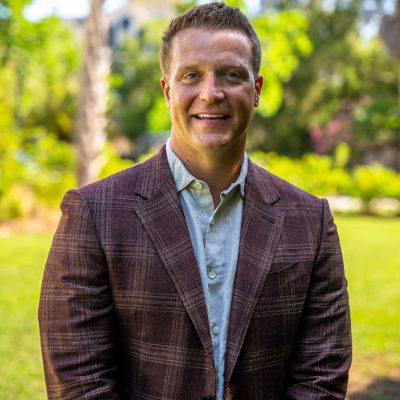
Caleb Pearson is the founder of Homebuyers SC and a licensed South Carolina real estate agent (License #83101) with 15+ years of real estate investing experience. He has personally been involved in over 500 purchases across South Carolina.