
Selling a Fire-Damaged House in South Carolina Without Rebuilding
You do not have to rebuild a fire-damaged house before selling it. Most owners who try, stop partway, because rebuilding is a construction project with an uncertain scope, funded by an insurance settlement that rarely covers all of it.
The decision worth making deliberately is what happens to the insurance claim, because that is usually worth more than the discount you are arguing over.
Homebuyers SC buys fire and disaster damaged property across Charleston, Berkeley, and Dorchester counties.
Settle the claim question first
- The mortgage lender is typically named on claim payments for structural damage and has to endorse them. Lenders commonly release funds in stages against completed work rather than in one payment.
- Who keeps the proceeds is a deal term. You can keep the settlement and sell the damaged house for less, or assign the claim and sell for more. Both are done. Pick one on purpose.
- Do not start rebuilding to preserve a claim without confirming with the carrier what the policy actually requires. Some policies distinguish between actual cash value and replacement cost, and what you receive can depend on whether you rebuild.
How your policy treats a sale, and what you forfeit or keep, depends on the policy language and your mortgage. Confirm with your carrier, your servicer, and a licensed South Carolina attorney before agreeing anything with a buyer.
Why will a lender not finance a fire-damaged house?
Every route is blocked at once, which is why the retail market disappears entirely rather than just getting thinner.
| Obstacle | Why |
|---|---|
| Structural integrity | Fire damages framing, and heat damages what it does not burn |
| Systems | Electrical and plumbing usually need replacement rather than repair |
| Insurance | A carrier will not write a policy on a fire-damaged structure, and no insurance means no loan |
| Appraisal | Difficult to value, and appraisers commonly require completed repairs |
| Smoke and water | The damage extends well beyond the burned area, including from firefighting |
| Scope unknown | Nobody knows what is behind the walls until demolition |
The insurance row is decisive in coastal South Carolina. Private carriers are already selective here, and the South Carolina Wind and Hail Underwriting Association, the last-resort wind and hail program for designated coastal zones in Beaufort, Charleston, Colleton, Georgetown, and Horry counties, covers wind and hail only and carries condition requirements including a sound roof. It is not a solution for a fire-damaged house.
Should I rebuild?
Occasionally. Be honest about what it involves.
| Step | Reality |
|---|---|
| Full assessment | Structural engineer, and often an environmental assessment |
| Demolition | Removing what cannot be saved, which is usually more than expected |
| Permits | Structural and system work is permitted work across the tri-county area |
| Contractor | Fire restoration is a specialty, and after a regional event crews are scarce |
| Funding gap | The settlement frequently does not cover the full rebuild |
| Time | Months, during which you carry taxes and any mortgage and live somewhere else |
| Lender control | If the lender holds the proceeds, they release against progress, not against your plan |
Rebuilding makes sense when the settlement is generous relative to the damage, you can bridge the gap, and the finished house would be worth materially more than the lot plus the work. It is a poor bet when the settlement is thin, the scope is unclear, or you did not want a construction project.
See selling a property that needs a full gut rehab.
What is a fire-damaged house actually worth?
A buyer values it as land plus whatever the remaining structure is worth, minus demolition, rebuild cost, carrying cost during the work, and their margin.
What moves that number up:
- A complete claim file. Adjuster’s report, scope of loss, itemized estimate, what has been paid.
- A fire report from the responding department, which is generally obtainable.
- Clear access and utilities status.
- Any engineering assessment you already have.
- Clarity on the claim. Whether proceeds transfer with the sale or stay with you.
What moves it down is a buyer having to assume the worst about an undocumented loss.
In South Carolina the closing must be supervised by a licensed attorney, from State v. Buyers Service Co., 292 S.C. 426, 357 S.E.2d 15 (1987), and that attorney handles how claim proceeds, payoffs, and liens interact at closing. See how to choose a cash home buyer in Charleston.
Frequently asked questions
Can I sell before the claim is settled?
Yes, and it needs to be addressed in the contract. An unsettled claim is not a reason to wait if you have decided to sell.
Will I get more by assigning the claim to the buyer?
The offer should be higher if the claim transfers, since the buyer is receiving the settlement. Compare both structures on total proceeds rather than on offer price alone.
What if the house is a total loss?
Then you are effectively selling land with demolition attached. That is a normal transaction for a buyer who develops.
Is there a code enforcement risk while it sits?
Often yes. A fire-damaged structure can draw citations and, in some jurisdictions, demolition orders. See selling a house with code violations.
Do I have to disclose a fire, even after repairs?
Disclose what you know. A repaired fire is still disclosable, and buyers still ask. Confirm your obligations with your closing attorney.
How fast can it close?
Usually one to three weeks once the closing attorney confirms clear title and the claim question is resolved.
Need to sell this house?
We buy houses across Charleston, Berkeley, and Dorchester counties for cash, exactly as they sit. No repairs, no cleaning, no commissions, and you choose the closing date.
We buy houses across the Lowcountry, including Charleston, North Charleston, Mount Pleasant and Summerville.
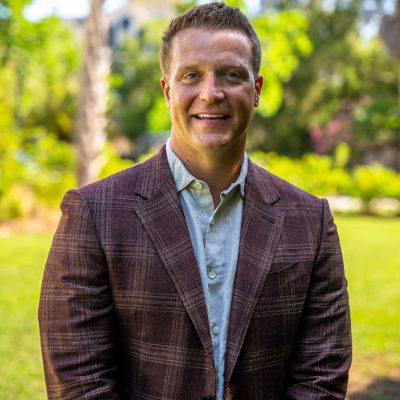
Caleb Pearson is the founder of Homebuyers SC and a licensed South Carolina real estate agent (License #83101) with 15+ years of real estate investing experience. He has personally been involved in over 500 purchases across South Carolina.