Selling a House With Years of Unpaid Utilities in South Carolina
You can sell a South Carolina house with unpaid utility balances, and in most cases the balances are paid out of the sale proceeds at closing rather than out of your pocket beforehand. What you should not do is assume the debt will simply follow you personally. In South Carolina, unpaid sewer charges attach to the real estate itself, with a priority that surprises most owners.
Homebuyers SC has bought properties with utility liens and shut-off service across Charleston, Berkeley, and Dorchester counties since 2017.
Do unpaid utilities become a lien on the house in South Carolina?
Sewer charges do, and the priority is unusually strong.
For a municipal system, SC Code 5-31-2040 provides that sewer service charges “not paid when due and payable shall be and constitute a lien upon the real estate,” and that “the lien herein provided shall be superior to all other liens except liens for unpaid property taxes.” SC Code 6-11-1240 says the same thing for special purpose and public service districts, which is how a large share of the tri-county area is served.
Read that priority again. Superior to all other liens except property taxes means it outranks the mortgage.
The statutes cited here are the starting point, not the whole answer. How they apply turns on your specific facts, so confirm with a licensed South Carolina attorney before acting.
| Utility | Does it typically attach to the property in SC? |
|---|---|
| Sewer | Yes. By statute, as a lien superior to everything but property taxes |
| Water | Frequently, where water and sewer are billed by the same municipal system or district, and under local ordinance |
| Electric and gas | Generally no. These are usually a personal account debt with the provider, not a lien on the house |
| Solid waste and stormwater fees | Often billed on the county tax notice, in which case they behave like taxes |
The practical consequence: electric and gas arrears are your problem as an account holder. Sewer arrears are the property’s problem, and they show up in the title search whether or not anyone mentioned them.
Why does utility debt kill a traditional sale?
Because it surfaces during the title search, usually late, and a lender will not fund a loan on a property with a superior lien still attached.
- Title work finds it. The closing attorney’s search picks up recorded municipal liens. If the number is large, the deal stalls while everyone works out who pays.
- The house may be unoccupiable. Service shut off for nonpayment can make a house fail an appraisal or inspection for habitability, which independently ends the financing.
- Utilities off means the inspection is incomplete. An inspector cannot test an HVAC system, water heater, or plumbing with no power or water. A lender that cannot get a complete inspection does not lend.
- The balance keeps growing. Penalties and interest continue accruing while the house sits.
This is the same mechanism that stops sales on houses with other unpaid obligations. See selling a house with back taxes or liens.
How do the balances get paid if I cannot pay them now?
Out of the proceeds, at closing, by the closing attorney. This is standard and it is what the attorney is there to do.
The sequence:
- The closing attorney orders the title search and obtains payoff figures from each utility and taxing authority.
- Those payoffs are listed on the settlement statement as deductions from the sale price.
- The attorney pays them directly at closing and obtains releases.
- You receive what remains.
You are not asked to bring money to the table unless the total owed exceeds the sale price, which is uncommon but worth checking early if the balances are large and the house is in poor condition.
In South Carolina the closing must be supervised by a licensed attorney. That is settled law from State v. Buyers Service Co., 292 S.C. 426, 357 S.E.2d 15 (1987), and in this situation it works in your favor, because clearing liens correctly is exactly what that attorney does. Ask any buyer which closing attorney they use, along with the other questions in how to choose a cash home buyer in Charleston.
Do I have to turn the utilities back on to sell?
Not for a cash sale. A buyer paying cash does not need a lender’s inspection, so service being off is an inconvenience for the walkthrough rather than an obstacle.
Say so in advance. A buyer who shows up to a house with no water and no power and was not told will revise the offer, and reasonably so.
What happens if I keep waiting?
The costs run one direction:
- Penalties and interest continue on the balance.
- Property taxes and insurance continue regardless of occupancy, and a vacant house is frequently non-renewed by its carrier. See selling a house you cannot insure anymore.
- A house with utilities off deteriorates quickly in the Lowcountry. No air conditioning through a Charleston summer means humidity, which means mold and swollen finishes.
- Code enforcement may open a case on a property that is visibly neglected, which adds its own accruing penalties. See selling a house with code violations.
Nothing in that list improves by waiting, and the sewer lien in particular grows without any action on anyone’s part.
Frequently asked questions
Can unpaid utilities actually block the sale?
They delay it rather than block it. The balances are identified in title work and paid at closing. What blocks a sale is discovering them two days before closing instead of at the start.
Will this reduce my offer?
The balances come off the proceeds, so yes, you net less. That is true whether you pay them now or at closing. Paying at closing simply means you do not need the cash upfront.
What if the debt is from a tenant, not from me?
Sewer liens attach to the property regardless of who ran up the bill. Electric and gas accounts in a tenant’s name generally do not. See selling a house after a tenant stops paying rent.
What if the house was inherited and the bills went unpaid during probate?
Common. The estate pays from the proceeds at closing like any other creditor. See selling an inherited house in probate in South Carolina.
How fast can it close?
Usually one to three weeks once the closing attorney has payoff figures and clear title. Tracking down balances across several utilities is often what sets the pace.
Do I need to know the exact amounts before I get an offer?
No. Bring what you know. The closing attorney obtains authoritative payoffs, and an estimate from you is enough to start.
Need to sell this house?
We buy houses across Charleston, Berkeley, and Dorchester counties for cash, exactly as they sit. No repairs, no cleaning, no commissions, and you choose the closing date.
We buy houses across the Lowcountry, including Charleston, North Charleston, Mount Pleasant and Summerville.
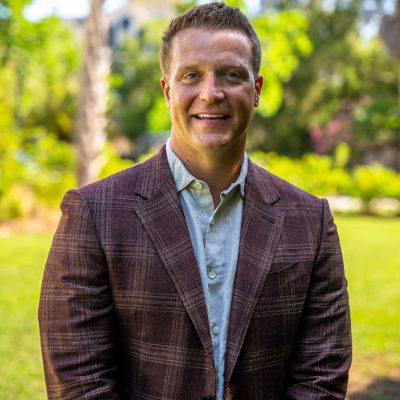
Caleb Pearson is the founder of Homebuyers SC and a licensed South Carolina real estate agent (License #83101) with 15+ years of real estate investing experience. He has personally been involved in over 500 purchases across South Carolina.