
Selling a Property Nobody Seems to Want in South Carolina
There is a difference between a property nobody wants and a property nobody can buy, and almost every owner in this situation has the second one.
That distinction matters because the two have opposite solutions. A pricing problem responds to a price cut. A financing problem does not respond to a price cut at all, because the obstacle is the lender’s requirements rather than the buyer’s willingness.
Homebuyers SC buys property across Charleston, Berkeley, and Dorchester counties that has not sold through other routes.
Which problem do I actually have?
| What you are seeing | What it usually means |
|---|---|
| Few showings, no offers | A pricing or presentation problem. Responds to price |
| Good showings, offers, deals dying at inspection | A condition problem. Does not respond to price |
| Deals dying at appraisal | A value or unpermitted-square-footage problem |
| Buyers cannot get insurance quotes | An insurability problem, which is a financing problem |
| Interest until they see the title work | A title problem |
| Interest until they learn about the occupant, the lease, or the estate | A situation problem, not a property problem |
| No interest at all, at any price | Access, marketing, or something genuinely unusual about the property |
Work out which row you are in before doing anything else, because each one has a different answer and only the first is about price.
The common causes, and where each is handled
- Condition a lender will not accept. Structure, roof, systems, water. See selling a house no lender will finance.
- Uninsurable. Age, claims history, condition, coastal exposure. No insurance, no mortgage. See selling a house you cannot insure anymore.
- Title defects. Heirs property, old liens, an unreleased mortgage. See selling a house with title problems.
- Zoning or use problems. A use that cannot be verified, or an open enforcement case. See selling a property with zoning or use issues.
- Unpermitted square footage, which caps the appraisal. See selling a house with unpermitted work.
- Occupancy. A tenant, an unauthorized occupant, or an estate that has not resolved. See selling a property with squatters.
- Access. A landlocked parcel, or no recorded legal access.
- Location factors a buyer cannot change: a road, a rail line, a flight path. See selling a house with ongoing noise or traffic issues.
How do I diagnose it cheaply?
All of this is free or nearly so, and it beats guessing.
- Ask your agent for the actual feedback, and for the reason each contract failed. Three failures for the same reason is a diagnosis.
- Get an insurance quote yourself. If you cannot get one, you have found the problem, and it is the one owners least expect.
- Pull the permit record from the building department and compare the square footage to what you are advertising.
- Check the Register of Deeds for what is recorded against the property.
- Get a written repair estimate, so you know whether the condition issue is bounded or open-ended.
Unmarketable to a lender is not unsellable
A property that no mortgage can touch still has value. It sells to buyers who do not need a mortgage, at a price reflecting the work and the risk rather than the finished product.
That is a real market, and it is how most of these properties actually change hands. What it is not is the retail price you were hoping for, and any buyer suggesting otherwise is not being straight with you.
Whether that trade makes sense depends on how long you can keep carrying the property while pursuing a retail sale that keeps failing. The arithmetic is in cash offer vs listing with an agent in Charleston.
What raises the price on a difficult property?
Reducing the unknowns, in order of value:
- Access. Let a buyer see everything.
- Documentation. Permits, repair estimates, insurance correspondence, engineering reports.
- Title clarity. Anything you already know about liens or ownership.
- Honesty about the situation. A buyer who is surprised after the contract renegotiates. A buyer who knew from the start priced it.
In South Carolina the closing must be supervised by a licensed attorney, from State v. Buyers Service Co., 292 S.C. 426, 357 S.E.2d 15 (1987), so anything recorded will surface regardless. See how to choose a cash home buyer in Charleston.
Frequently asked questions
Should I keep cutting the price?
Only if your problem is genuinely a pricing problem. If contracts are dying at inspection or appraisal, cutting the price will not help, because the obstacle is the lender.
Should I take it off the market and relist later?
That resets days on market and changes nothing else. If the underlying problem is condition, title, or insurability, it will be there when you relist. See selling a house after a failed listing.
Is it worth fixing one thing?
If one bounded repair restores financeability, yes, because it reopens the entire retail market. The trap is a repair whose scope grows once started.
What if several problems overlap?
That is the usual case, and it is why the retail route keeps failing. Each one alone might be solvable. Together they exceed what a listing timeline can absorb.
How fast can a cash sale close?
Usually one to three weeks once the closing attorney confirms clear title. See how fast can I sell my house in South Carolina.
Need to sell this house?
We buy houses across Charleston, Berkeley, and Dorchester counties for cash, exactly as they sit. No repairs, no cleaning, no commissions, and you choose the closing date.
We buy houses across the Lowcountry, including Charleston, North Charleston, Mount Pleasant and Summerville.
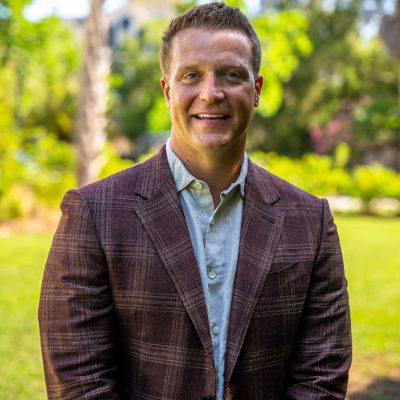
Caleb Pearson is the founder of Homebuyers SC and a licensed South Carolina real estate agent (License #83101) with 15+ years of real estate investing experience. He has personally been involved in over 500 purchases across South Carolina.