
Selling a Vacant Property in South Carolina Before It Costs You More
An empty house in the Lowcountry does not hold still. It costs money every month, it deteriorates faster than owners expect, and at a certain point the insurance and condition problems compound into a house no lender will finance.
That last point is the one worth acting on. A vacant house tends to move from “we will deal with it later” to “only a cash buyer can purchase this” without anyone deciding it should.
Homebuyers SC buys vacant and long-empty property across Charleston, Berkeley, and Dorchester counties.
What does vacancy actually cost?
| Cost | What happens |
|---|---|
| Insurance | Standard homeowners policies commonly restrict or exclude coverage after a property has been vacant for a set period, and carriers non-renew. Vacant property policies exist and cost more |
| Property taxes | Under SC Code 12-43-220, an owner-occupied legal residence is assessed at 4% of fair market value and other real property at 6%. A house nobody occupies as a legal residence generally does not qualify for the 4% ratio |
| Utilities | Turning them off is worse than leaving them on here. Air conditioning is what keeps humidity from destroying the interior |
| Maintenance and yard | Neglect draws code enforcement in many jurisdictions |
| Deterioration | Humidity, pests, and moisture move quickly in an unconditioned Lowcountry house |
| Liability | You own the property and the risk that comes with it |
| Occupancy risk | An obviously empty house attracts unauthorized occupants |
The insurance and tax rows are the two that surprise people, because they arrive as paperwork rather than as visible damage.
Why does an empty house here deteriorate faster than elsewhere?
Humidity. A closed-up house with no air conditioning running through a Charleston summer develops the conditions for mold, swollen woodwork, and failing finishes in a single season. Add a roof leak nobody is there to notice and the damage compounds in months rather than years.
This is why “we will sell it next spring” frequently means selling a materially worse house next spring.
See selling a house with mold issues and getting out of being a landlord.
When does a vacant house stop being financeable?
When enough of these are true at once:
- No working heat, electrical, or plumbing, which many loan programs require
- Active water intrusion or resulting mold
- A roof at or past the end of its life
- No carrier willing to write a policy, which alone ends any mortgage
- Structural movement from settlement or moisture
At that point your buyer pool is investors regardless of price. See selling a house no lender will finance and selling a house you cannot insure anymore.
What should I do right now if the house is empty?
In order, and the first three are cheap.
- Call the insurer and tell them it is vacant. Not disclosing vacancy is how a claim gets denied. Ask what your policy requires and what a vacant property policy would cost.
- Keep the power on and the air conditioning running at a moderate setting. This is the cheapest preservation available in this climate.
- Ask the county assessor what assessment ratio will apply, so you know the real holding cost.
- Secure it. Locks, and no visible signs that nobody has been there.
- Have someone look at it regularly, or pay someone to.
- Decide on a date. A vacant house without a decision attached is the expensive version.
Listing it or selling as-is?
| List it | Sell as-is | |
|---|---|---|
| Condition required | Financeable and insurable today | Any |
| Money upfront | Repairs, clean-out, utilities through the listing | None |
| Time | Days on market plus 30 to 45 days for a lender | 1 to 3 weeks |
| Holding costs during | Continue, including the higher tax ratio | Stop at closing |
| Contents | Cleared before listing | Can stay |
| Fits when | The house is sound and the vacancy is recent | It has been empty a while, or needs work |
List it if it is sound, insurable, and a lender would finance it today. The higher price generally survives.
Sell as-is if the condition or the contents are the actual obstacle, or if the holding costs are the thing you want to stop. The arithmetic is in cash offer vs listing with an agent in Charleston.
If it is full as well as empty, that is a separate obstacle with an easy answer. See selling a hoarder house without cleaning it out and selling an inherited house full of belongings.
Frequently asked questions
Do I need to clean it out first?
Not for a cash sale. Take what matters to you and leave the rest.
What if utilities are already off?
Not an obstacle to selling. It matters for a walkthrough, so say so in advance. Turning power back on before a sale is usually worth it if the house has been closed up a long time.
What if someone is living there without permission?
Removal is a court process in South Carolina and you cannot do it yourself, but you can sell without finishing it. See selling a property with squatters.
What if it is an inherited house nobody has dealt with?
Then the authority to sell is the first question, before anything about the building. See the heir’s checklist.
Is there a code enforcement risk?
In many jurisdictions, yes, and citations can accrue while the property sits. See selling a house with code violations.
How fast can it close?
Usually one to three weeks once the closing attorney confirms clear title. In South Carolina that attorney supervision is required under State v. Buyers Service Co., 292 S.C. 426, 357 S.E.2d 15 (1987). See how fast can I sell my house in South Carolina.
Need to sell this house?
We buy houses across Charleston, Berkeley, and Dorchester counties for cash, exactly as they sit. No repairs, no cleaning, no commissions, and you choose the closing date.
We buy houses across the Lowcountry, including Charleston, North Charleston, Mount Pleasant and Summerville.
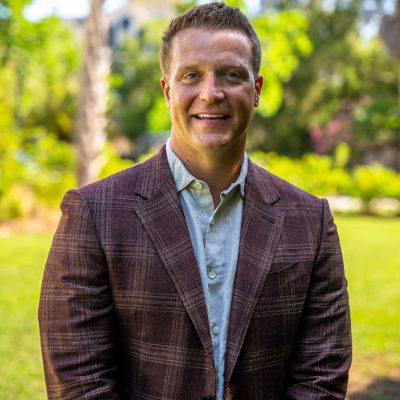
Caleb Pearson is the founder of Homebuyers SC and a licensed South Carolina real estate agent (License #83101) with 15+ years of real estate investing experience. He has personally been involved in over 500 purchases across South Carolina.