
Selling a Parent's House After a Move to Assisted Living in South Carolina
Two questions decide everything here, and neither is about the house. First, who has legal authority to sign a deed. Second, whether selling now is actually necessary, because South Carolina lets an owner who moves into a care facility keep the 4% property tax rate under specific conditions.
Get those two answered before anyone lists anything. Homebuyers SC buys houses as-is across Charleston, Berkeley, and Dorchester counties, with no repairs, no showings, and no clean-out required.
Who can legally sell the house?
The owner, if they are able to make and understand the decision. If not, someone else needs documented authority, and South Carolina is specific about what that looks like.
| Situation | Who signs | What is required |
|---|---|---|
| Owner is competent | The owner | Nothing extra. A family member may help, but the owner signs |
| Valid durable power of attorney, owner now incapacitated | The named agent | The POA must be recorded in the same manner as a deed in the county where the principal resides, per SC Code 62-8-109(c) |
| No power of attorney, owner cannot manage their affairs | A court-appointed conservator | Probate court proceeding. Slower and more expensive than a POA |
| Owner has died | The personal representative | Probate, and authority to sell under the will or by court order (SC Code 62-3-711(b)) |
The recording requirement catches families off guard. A power of attorney signed years ago and kept in a drawer is not enough once the principal is incapacitated. Under 62-8-109(c), after the principal’s incapacity the agent may exercise that authority only if the power of attorney has been recorded in the county where the principal resides.
South Carolina also has real execution formalities. SC Code 62-8-105 requires the power of attorney to be signed, attested with the same formality and witness requirements as a will, and acknowledged or proved under SC Code 30-5-30. A form printed off the internet and signed at a kitchen table frequently fails at least one of those.
The statutes cited here are the starting point, not the whole answer. How they apply turns on your specific facts, so confirm with a licensed South Carolina attorney before acting.
If there is no valid POA and the owner can no longer sign, conservatorship is the route. Start that conversation with an elder law attorney early, because it sets the timeline for everything else.
Do we have to sell right away?
Often not, and South Carolina gives a real reason to slow down and check.
Under SC Code 12-43-220, an owner-occupied legal residence is assessed at 4% of fair market value. Other real property is assessed at 6%. That difference is substantial on an annual tax bill.
The provision that matters here: if an owner entitled to the 4% ratio “becomes a patient at a nursing home or a community residential care facility, then the owner retains the four percent assessment ratio and applicable exemptions for as long as the owner remains in the home or facility,” provided the owner otherwise qualifies, intends to return to the property, and the property is not rented beyond the limit the statute allows.
So the tax answer is not automatic. Three things to confirm with the county assessor:
- Whether the facility qualifies under the statute
- Whether there is a genuine intention to return
- Whether any rental of the house would exceed what the statute permits
If the 4% ratio survives, holding costs are lower than the family assumes. If it does not, the bill moves toward the 6% ratio and holding gets more expensive every year.
What actually drives the decision?
| Factor | Points toward keeping it | Points toward selling |
|---|---|---|
| Care costs | Other assets or income cover them | The house is the asset that funds care |
| The 4% ratio | Retained under 12-43-220 | Lost, and the tax bill rises |
| Condition | Sound, secure, and someone nearby can check on it | Deferred maintenance, or nobody local |
| Insurance | Carrier will keep covering it | Vacancy triggers non-renewal, common in the Lowcountry |
| Intention to return | Genuine | Not realistic |
| Family capacity | Someone has the time to manage it | Everyone is out of state or stretched |
A vacant house in Charleston deteriorates faster than most families expect. No air conditioning through a Lowcountry summer means humidity, which means mold, swollen finishes, and pests. Insurers also non-renew on vacancy, and an uninsurable house is an unfinanceable one when you finally do sell. See selling a house you cannot insure anymore and selling a vacant or abandoned property.
What about Medicaid?
Ask before selling, not after. Medicaid eligibility involves a look-back at asset transfers, and how the proceeds of a house sale are handled can affect eligibility.
This is genuinely specialized, the rules change, and getting it wrong is expensive. An elder law attorney or a benefits counselor should answer it for your situation before the house goes under contract. Nothing on this page is a substitute for that conversation.
Why do these houses rarely sell well on the open market?
Because of what a retail sale asks for.
A house lived in for decades usually needs work, and it is usually full. Clearing it out means a family sorting through a lifetime of belongings, on a deadline, frequently from other states, while also managing a care transition. Then repairs, then staging, then showings, then a buyer whose lender can reject the house over the same deferred maintenance.
An as-is sale removes the clean-out entirely. Take what matters to the family, leave the rest, and the buyer handles disposal after closing. See selling a hoarder house without cleaning it out and selling an inherited house full of belongings.
In South Carolina the closing must be supervised by a licensed attorney, under State v. Buyers Service Co., 292 S.C. 426, 357 S.E.2d 15 (1987). That attorney is also who confirms the power of attorney or conservatorship is sufficient to convey title, which is exactly the question that matters most here. Ask any buyer who their closing attorney is: how to choose a cash home buyer in Charleston.
Frequently asked questions
Can I sell my parent’s house if I have power of attorney?
If the POA is validly executed, grants authority over real property, and, once your parent is incapacitated, has been recorded in the county where they reside. Have the closing attorney review it before you sign a contract.
What if there is no power of attorney and my parent can no longer sign?
Conservatorship through the probate court. Talk to an elder law attorney about the timeline before making commitments to a buyer.
Do we have to empty the house first?
Not for a cash sale. Remove documents, photographs, and anything of personal or financial value, and leave the rest.
Will the property taxes go up?
They can. The 4% legal residence ratio may be retained under 12-43-220 when the owner is in a nursing home or community residential care facility and intends to return. Confirm with the county assessor rather than assuming either way.
What if siblings disagree about selling?
While the parent is living and competent, it is the parent’s decision. After death it becomes a probate question, and South Carolina’s heirs property law shapes it. See selling a house in probate with multiple heirs.
How fast can it close?
Usually one to three weeks once the closing attorney confirms clear title and signing authority. Authority is normally what sets the pace, not the house.
Need to sell this house?
We buy houses across Charleston, Berkeley, and Dorchester counties for cash, exactly as they sit. No repairs, no cleaning, no commissions, and you choose the closing date.
We buy houses across the Lowcountry, including Charleston, North Charleston, Mount Pleasant and Summerville.
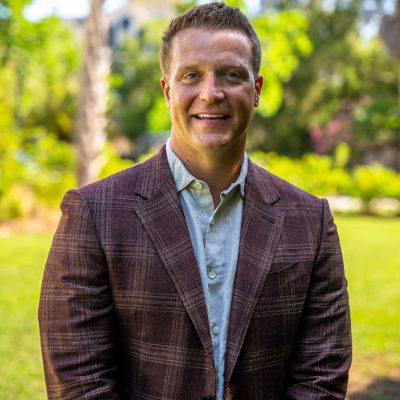
Caleb Pearson is the founder of Homebuyers SC and a licensed South Carolina real estate agent (License #83101) with 15+ years of real estate investing experience. He has personally been involved in over 500 purchases across South Carolina.