
Selling a Family Home After a Death in South Carolina
There is no hurry on most of this, and there is some hurry on a little of it. Knowing which is which is most of what makes this manageable.
The parts that genuinely need early attention are insurance, securing the house, and finding out whether there is authority to sell. Everything else, including deciding what to do with the contents and with the house itself, can wait until the family is ready.
Homebuyers SC has bought inherited property across Charleston, Berkeley, and Dorchester counties since 2017, including houses where nothing had been moved.
What actually needs doing in the first weeks?
- Order certified death certificates. Ten to fifteen. The court, banks, insurers, and the closing attorney each want one, and getting more later is slower than getting them now.
- Tell the insurance carrier. A house that becomes unoccupied is a different risk, and policies commonly restrict coverage after a period of vacancy. Not telling them is how a claim gets denied.
- Secure the house and keep the power on. Air conditioning running matters in this climate. A closed-up Lowcountry house develops mold problems in a single summer.
- Keep paying what has to be paid. Mortgage, taxes, insurance. Nonpayment starts clocks that are harder to stop than to avoid.
- Find the will, if there is one, and find out where the deed is.
- Talk to a probate attorney before deciding anything about selling.
Sorting belongings, clearing the house, and choosing between listing and selling are not on that list. None of them are urgent, and all of them go better later.
Who has authority to sell the house?
This is the step families most often miss, and it is where sales come apart.
Being appointed personal representative is not by itself enough. SC Code 62-3-715 gives a personal representative broad power to “sell, mortgage, or lease any real or personal property of the estate,” but that power is expressly subject to a restriction in SC Code 62-3-711(b): “Except where the will of the decedent authorizes to the contrary, a personal representative may not sell real property of the estate except as authorized pursuant to the procedures described in Sections 62-3-911 or Sections 62-3-1301 et seq.”
| Situation | What it means |
|---|---|
| The will expressly authorizes sale of real property | The personal representative can proceed |
| The will is silent, or there is no will | A petition to the probate court is required first |
| The house passed outside probate, by trust or survivorship deed | Probate may not control it at all |
Read the will, and have a closing attorney read it, before anyone signs a contract.
Probate authority and procedure are fact-specific. Talk to a licensed South Carolina attorney about the estate before relying on any of this.
Fuller detail is in selling an inherited house in probate in South Carolina and the heir’s checklist.
What does the estate pay while this is sorted out?
| Cost | Note |
|---|---|
| Property taxes | The rate may change. Under SC Code 12-43-220 an owner-occupied legal residence is assessed at 4% and other real property at 6%, and a house nobody occupies as a legal residence generally does not qualify for the 4% ratio |
| Insurance | Vacancy frequently triggers non-renewal or a more expensive vacant property policy |
| Utilities | Needed to protect the house, not optional here |
| Mortgage | Continues, and nonpayment starts a foreclosure clock |
| Maintenance | Including the yard, which draws code enforcement in some jurisdictions |
Families are routinely surprised by the tax change on the first full bill after a death. Ask the county assessor what ratio will apply rather than budgeting from last year.
Do we have to empty the house?
Not to sell it. A cash buyer takes it with the contents, and disposal becomes their expense.
What is worth doing, on your own timeline: take out what matters. Documents, photographs, jewellery, anything of personal or financial significance. Once the deed transfers, everything left goes with the house. Give yourselves a real date for that rather than an open one, because an open one becomes a year.
See selling a hoarder house without cleaning it out and selling an inherited house full of belongings.
What if the family does not agree?
Common, and worth naming early rather than discovering at the contract stage.
If the property is held by family members as tenants in common, South Carolina’s Clementa C. Pinckney Uniform Partition of Heirs’ Property Act, SC Code 15-61-310 and following, requires a court to determine value by appraisal, offer the other cotenants a buyout at that value, and consider dividing the property in kind before ordering a sale. That protects families against a forced fire sale, and it also makes partition slow and expensive.
What resolves these faster is a number everyone can see. A neutral appraisal, or a written offer with a specific closing date, gives people something concrete to react to instead of an argument about what the house might be worth. See selling a house in probate with multiple heirs.
Frequently asked questions
Is there a deadline to sell?
No. There are probate deadlines, including the creditor claim period of eight months from first publication under SC Code 62-3-801(a), but no deadline forcing you to sell. Carrying costs are the pressure, not a rule.
Can we sell while probate is running?
Often yes, once authority to sell is established. The closing attorney will tell you how the creditor period is handled.
What if some of us live out of state?
Common, and it does not require travel. South Carolina does not permit remote online notarization, so you sign before a notary physically present with you and return documents by courier. See selling an inherited house when you live out of state.
What if there is a tenant?
The lease survives the death. See selling an inherited house with tenants still inside.
What about the mortgage and any debts?
Paid from the sale proceeds at closing rather than out of anyone’s pocket beforehand. See selling a property after inheriting debt.
How fast can it close once we have authority?
Usually one to three weeks after the closing attorney confirms clear title. In South Carolina that supervision is required under State v. Buyers Service Co., 292 S.C. 426, 357 S.E.2d 15 (1987). There is also no obligation to move quickly, and a closing date can be set further out if the family needs time.
Need to sell this house?
We buy houses across Charleston, Berkeley, and Dorchester counties for cash, exactly as they sit. No repairs, no cleaning, no commissions, and you choose the closing date.
We buy houses across the Lowcountry, including Charleston, North Charleston, Mount Pleasant and Summerville.
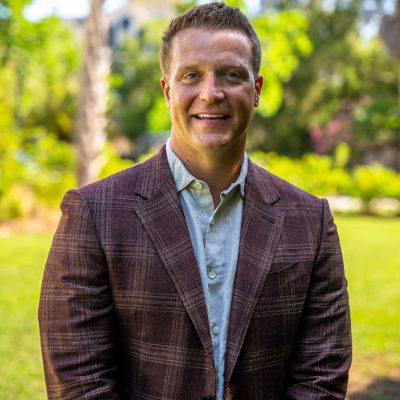
Caleb Pearson is the founder of Homebuyers SC and a licensed South Carolina real estate agent (License #83101) with 15+ years of real estate investing experience. He has personally been involved in over 500 purchases across South Carolina.