
Selling an Inherited House Full of Belongings in South Carolina
The house is rarely what stops an estate. The contents are.
Sorting a lifetime of belongings is slow, expensive, emotionally heavy, and nearly impossible to coordinate among heirs who live in different places. It is the single most common reason an inherited South Carolina house sits empty for years while the estate pays taxes, insurance, and utilities on it.
You do not have to do it. A cash buyer purchases the house with the contents inside and handles disposal after closing.
Homebuyers SC has bought inherited property with contents included across Charleston, Berkeley, and Dorchester counties since 2017, including houses where nothing had been moved.
The one thing to do before the deed transfers
Take out what matters to you.
Documents, photographs, jewellery, anything with personal or financial significance. Once the deed transfers, everything left goes with the house. That is the trade that makes a with-contents sale work, and it is not reversible.
Give yourselves a specific date for that rather than an open-ended intention, because an open-ended intention becomes another year. A weekend, with everyone who wants something present, is the usual shape of it.
What does clearing a house actually cost?
Worth pricing before deciding, because it is paid upfront, out of pocket, before any sale money arrives.
| What it involves | Reality |
|---|---|
| Labour | Specialty clean-out crews price by volume and conditions, not hours |
| Disposal | Multiple roll-off dumpsters, tipping fees, separate handling for anything hazardous |
| Sorting | Someone decides what is kept. On an estate that is the family, in person |
| Travel | If heirs are out of state, repeatedly |
| Repairs revealed underneath | Floors, plumbing, and wiring are frequently worse than expected once visible |
| Time | Weeks at minimum, while the estate carries the house |
| What you get | A house that can now be listed, at a price still reflecting its condition |
The trap: clearing the house does not produce a retail-ready house. It produces a house that needs repairs, which is a second large expense before a lender will finance it for a buyer. Two costs in sequence.
What about an estate sale?
Estate sale companies are legitimate and some do good work. Understand the structure before assuming it solves the problem.
- They take a negotiated percentage, and may charge separately for advertising, staffing, research, and security
- They sell what has resale value, which in most houses is a small fraction of the contents
- Whatever does not sell is still there afterward, which is the part people miss. You still need a clean-out
- It takes planning and time, and someone local has to coordinate it
An estate sale makes sense when there are genuinely valuable items and someone has the capacity to manage it. It rarely solves the clean-out problem on its own.
Does it have to be sold empty?
No. This is the whole point.
| Clear it, then list | Sell with contents | |
|---|---|---|
| Upfront cost | Clean-out, then repairs | None |
| Who sorts it | The family, in person | You take what you want, the rest transfers |
| Time | Weeks to months | 1 to 3 weeks |
| Estate carrying costs | Continue throughout | Stop at closing |
| Out-of-state heirs | Have to travel, repeatedly | One walkthrough, or none |
| Price | Higher gross, after two rounds of spending | Lower, but net of everything else often close |
See selling a hoarder house without cleaning it out if the house is genuinely full, and selling an inherited house when you live out of state if distance is the obstacle.
What has to be sorted out on the legal side?
Authority to sell, and it comes before anything about the contents.
Being appointed personal representative is not by itself enough. Under SC Code 62-3-711(b), “except where the will of the decedent authorizes to the contrary, a personal representative may not sell real property of the estate except as authorized pursuant to the procedures described in Sections 62-3-911 or Sections 62-3-1301 et seq.”
So read the will, and have the closing attorney read it, before signing anything. Full detail in selling an inherited house in probate in South Carolina and the heir’s checklist.
Probate authority is fact-specific. Talk to a licensed South Carolina attorney about the estate before relying on any of this.
What is the estate paying while this drags?
- Property taxes, possibly at the 6% ratio rather than 4%, since an inherited house nobody occupies as a legal residence generally does not qualify under SC Code 12-43-220
- Insurance, and carriers non-renew on vacancy
- Utilities, which you need to keep running, because a closed-up Lowcountry house develops mold in one summer
- Maintenance, and code enforcement if it slips
- Deterioration, which is faster here than families expect
Frequently asked questions
Do we have to remove anything at all?
Only what you want to keep. Everything else transfers with the house.
Will the offer be lower because of the contents?
Yes. It reflects the clean-out cost and the repairs underneath. Compare that against what you would net after paying for both yourselves, months later.
What if heirs disagree about the belongings?
Set a date, let everyone take what they want, and sell the remainder with the house. Splitting contents is far easier than splitting a house. See selling a house in probate with multiple heirs.
What if there are valuables we have not found?
That is exactly why the walkthrough and the sorting weekend matter. Once the deed transfers, the contents go with the house.
What if there is a tenant as well?
The lease survives. See selling an inherited house with tenants still inside.
How fast can it close?
Usually one to three weeks once the closing attorney confirms clear title and authority to sell. In South Carolina that supervision is required under State v. Buyers Service Co., 292 S.C. 426, 357 S.E.2d 15 (1987).
Need to sell this house?
We buy houses across Charleston, Berkeley, and Dorchester counties for cash, exactly as they sit. No repairs, no cleaning, no commissions, and you choose the closing date.
We buy houses across the Lowcountry, including Charleston, North Charleston, Mount Pleasant and Summerville.
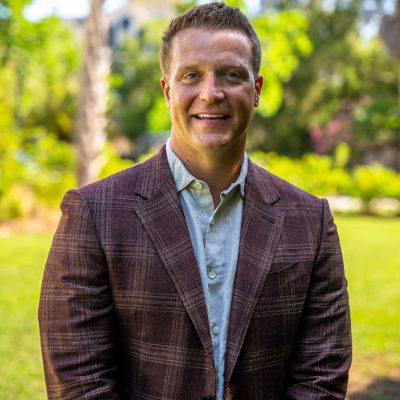
Caleb Pearson is the founder of Homebuyers SC and a licensed South Carolina real estate agent (License #83101) with 15+ years of real estate investing experience. He has personally been involved in over 500 purchases across South Carolina.