
Selling an Inherited House in South Carolina When You Live Out of State
You can sell an inherited South Carolina house from another state without traveling here, and most out-of-state heirs do. The closing itself must be supervised by a South Carolina attorney, but your signature does not have to happen in South Carolina. The parts that actually require attention are the probate authority to sell, the state’s creditor claim periods, and the nonresident withholding that comes out at closing.
Homebuyers SC has bought inherited property from heirs living in other states since 2017, across Charleston, Berkeley, and Dorchester counties, including houses still full of a parent’s belongings.
Can I sell an inherited house in South Carolina if I live in another state?
Yes. Residency is not a requirement for selling property here, and it is not a requirement for serving as personal representative of the estate either.
What you need is authority. Until the probate court appoints a personal representative, nobody has the legal standing to sign a deed on behalf of the estate. That appointment happens in the probate court of the county where the person died, so Charleston County Probate Court for a house in Mount Pleasant or North Charleston, Dorchester County for Summerville, Berkeley County for Goose Creek or Moncks Corner.
If the house passed directly to named heirs outside probate, or was held in a trust, the path is shorter. Check first, because the answer changes everything that follows.
How long does South Carolina probate take before I can sell?
The house can often be sold well before the estate closes. What sets the outer timeline is the creditor claim period, because a buyer’s closing attorney wants to know that creditors cannot reach the property after the sale.
| South Carolina deadline | What the statute says | Why it matters to a sale |
|---|---|---|
| Notice to creditors | 8 months from the date of first publication (SC Code 62-3-801(a)) | This is the window most estates are actually waiting on |
| Known creditors | 1 year from date of death, or 60 days from mailing actual notice, whichever is later (62-3-801(b)) | Applies to creditors the personal representative knows about |
| Outer limit | 1 year from date of death (62-3-803) | The hard backstop on most claims |
These are the statutory periods, not an estimate of how long your county’s court takes. Court processing time sits on top of them, and it varies.
The statutes cited here are the starting point, not the whole answer. How they apply turns on your specific facts, so confirm with a licensed South Carolina attorney before acting.
A sale during the claim period is common and routine. The closing attorney handles it by confirming the personal representative’s authority and where needed, holding funds. This is a question to put to the closing attorney early rather than assuming either way.
What does an out-of-state heir actually have to do?
Less than most people expect. The tasks that feel impossible from a thousand miles away are mostly tasks a cash buyer absorbs.
| Task | Retail sale from out of state | As-is cash sale |
|---|---|---|
| Clean out the house | You, or a service you hire and cannot supervise | Not required, contents can stay |
| Repairs before listing | Contractors you cannot oversee | Not required |
| Showings and access | Coordinated remotely, repeatedly | One walkthrough |
| Utilities and lawn care | Maintained through the whole listing period | Maintained only until closing |
| Travel | Usually at least one trip, often more | Typically none |
| Timeline | Listing, contract, inspection, buyer’s financing | Usually one to three weeks after clear title |
The clean-out is the item that most often decides it. Emptying a parent’s house is expensive, slow, and emotionally heavy, and it is nearly impossible to manage from another state. Selling with the contents in place removes the whole problem. See selling a hoarder house without cleaning everything out if the house is genuinely full.
Do I have to travel to South Carolina to close?
No, and this is the part worth understanding, because the rule sounds stricter than it is.
South Carolina requires that a real estate closing be supervised by a licensed South Carolina attorney. That is settled law from State v. Buyers Service Co., 292 S.C. 426, 357 S.E.2d 15 (1987), not a local preference. It is why you cannot close a South Carolina house through an out-of-state title company the way you might in other states.
What the rule governs is who supervises the closing, not where the seller physically is. In practice the closing attorney sends your documents to you, you sign them in front of a notary wherever you live, and you return them by overnight courier. Funds are wired. Many out-of-state sellers never set foot in the state.
Ask the buyer which closing attorney they use before you accept anything. A buyer who is vague about it, or who talks about a title company in another state, is telling you something. More on that in how to choose a cash home buyer in Charleston.
What is nonresident withholding, and will it apply to me?
Probably, and it surprises people at the closing table, so it is better known in advance.
South Carolina requires the closing to withhold state income tax from a nonresident seller’s proceeds under SC Code 12-8-580. The mechanics that matter:
- If you furnish the buyer with an affidavit stating the gain, withholding is calculated on the gain, at a percentage equal to South Carolina’s maximum individual income tax rate.
- If you do not furnish that affidavit, withholding is calculated on the full amount realized on the sale, which is a much larger number.
- For a corporation or other nonresident entity, the rate is five percent.
The withheld amount is not a tax you owe permanently. It is prepayment, credited when you file a South Carolina return, and refundable if it exceeds your actual liability. The reason to care is cash at closing. Providing the gain affidavit rather than skipping it is usually the difference between a modest withholding and a large one.
Inherited property also generally receives a stepped-up basis as of the date of death, which for many heirs means the taxable gain on a prompt sale is small. Confirm your own numbers with a tax professional, because that is a question about your return, not about the house.
What happens if the house just sits?
The costs run in one direction, and they run faster on a vacant house than on an occupied one.
- Property taxes and insurance continue. A vacant house may also be repriced or declined by the insurer, and standard homeowners coverage often lapses after a set vacancy period.
- The owner-occupant assessment ratio does not apply to an inherited house you do not live in, so the tax bill is frequently higher than what the deceased was paying. This catches heirs off guard in the first full tax year.
- An empty house deteriorates. Humidity in the Lowcountry is unkind to a house with no air conditioning running.
- Family pressure builds. Multiple heirs with different opinions and no deadline is how estates stall for years. See selling a house in probate with multiple heirs.
Frequently asked questions
Do all the heirs have to agree?
If title is held by multiple heirs directly, generally yes, every owner signs. If a personal representative has authority to sell, that authority may be enough on its own. The closing attorney will determine which situation applies from the will and the probate file.
Can we sell before probate is finished?
Often yes, once a personal representative is appointed and has the authority to sell. See selling an inherited house in probate in South Carolina.
What if there is a mortgage, or liens, or unpaid taxes?
Those are paid from the proceeds at closing rather than out of your pocket beforehand. See selling a house with back taxes or liens.
What if there is a tenant in the house?
It changes the timeline but not the outcome. See selling an inherited house with tenants still inside.
How fast can an out-of-state sale actually close?
Usually one to three weeks once the closing attorney confirms clear title and the personal representative’s authority. Probate complications and title defects extend it, and courier time for documents adds a day or two on each end.
Do I need a South Carolina real estate agent?
Not for a direct cash sale. There is no listing, no commission, and no agent on the seller’s side. If you are weighing that against listing the property, the arithmetic is in cash offer vs listing with a realtor in South Carolina.
Need to sell this house?
We buy houses across Charleston, Berkeley, and Dorchester counties for cash, exactly as they sit. No repairs, no cleaning, no commissions, and you choose the closing date.
We buy houses across the Lowcountry, including Charleston, North Charleston, Mount Pleasant and Summerville.
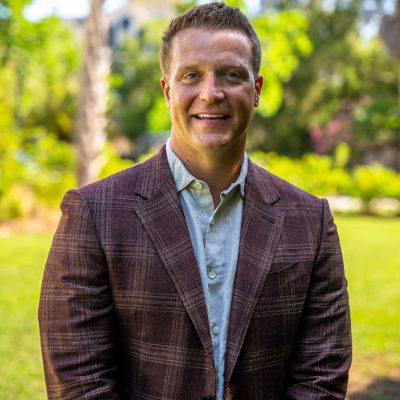
Caleb Pearson is the founder of Homebuyers SC and a licensed South Carolina real estate agent (License #83101) with 15+ years of real estate investing experience. He has personally been involved in over 500 purchases across South Carolina.