
Selling a House With Mold or Water Damage in the South Carolina Lowcountry
Mold is almost never the problem. It is the visible result of a water problem, and that distinction decides everything about how a sale goes.
Remediating visible growth without finding and stopping the water means it returns, usually before closing, and a buyer’s inspector finds the moisture regardless of what was cleaned. Owners who understand that sell more smoothly than owners who do not.
Homebuyers SC buys houses with mold and water damage across Charleston, Berkeley, and Dorchester counties.
Why is this so common here?
Humidity, and the way Lowcountry houses are built.
- Crawlspaces. Much of the older housing stock sits on piers over a crawlspace, which is a humid, ground-contact environment under the floor.
- High water table and heavy seasonal rain. Moisture is present in the soil more of the time than in most of the country.
- Air conditioning dependence. A closed-up house with no air conditioning running through a Charleston summer develops the conditions for mold in a single season. This is why vacant houses here deteriorate so quickly.
- Storm and flood exposure. Water intrusion events are more frequent near the coast.
Where is the water actually coming from?
A buyer, an inspector, and a remediation contractor will all ask this first. Common sources, in rough order:
| Source | Usual signs |
|---|---|
| Roof leak | Ceiling staining, attic evidence, damage below valleys and penetrations |
| Plumbing leak | Localized damage under fixtures, in walls, or under floors |
| Crawlspace moisture | Musty smell through the floor, damp insulation, condensation on ducts |
| HVAC condensation | Damage near air handlers and duct runs |
| Grading and drainage | Water entering at the foundation after rain |
| Windows and flashing | Damage below openings |
| A past flood or storm event | Broad, horizontal damage lines |
Identifying the source is worth real money on a sale, because it converts an unbounded problem into a bounded one.
What does it do to a financed sale?
| Obstacle | Why |
|---|---|
| Lender condition | Visible mold or active water intrusion frequently triggers a repair requirement before funding |
| Appraisal | The appraiser may call the condition and require correction |
| Insurance | Carriers are cautious about water claims history. A declined policy ends the mortgage independently |
| Buyer reaction | Mold alarms retail buyers more than most defects, fairly or not |
| Unknown extent | Nobody knows how far it goes until material comes out |
The insurance row compounds here. Multiple water claims make a property harder to insure, and an uninsurable house is unfinanceable. See selling an uninsurable house.
Should I remediate before selling?
Only with the source fixed, otherwise you are paying for a result that does not hold.
| Step | What to expect |
|---|---|
| Assessment | A professional identifies the extent and, ideally, the source |
| Fixing the source | Roof, plumbing, drainage, crawlspace. This is the real project |
| Remediation | Containment, removal of affected material, priced by area |
| What is behind it | Removing material routinely exposes rot, framing damage, or more moisture |
| Clearance testing | Often wanted by a buyer or lender afterward |
| Disclosure | A remediated condition is still disclosable |
Remediating makes sense when the source is identified and bounded, you can fund both parts, and the house is otherwise sound enough that clearing it restores financeability. It is a poor bet when the moisture is structural or chronic, which in older crawlspace houses it frequently is.
See do I need repairs before selling as-is.
Do I have to disclose it?
Disclose what you know.
SC Code 27-50-40 requires a residential property condition disclosure statement covering categories that include environmental hazards and structural components, and lets an owner indicate actual knowledge or make no representation. SC Code 27-50-30 exempts certain transfers, including transfers by a fiduciary administering a decedent’s estate and foreclosure sales.
“There was water in the crawlspace after the storm and I have not had it assessed” is a real answer and a safe one. Cleaning visible growth and saying nothing is not, because the moisture is still there and inspectors test for it.
Whether and how disclosure applies to your transaction is a question for a licensed South Carolina attorney. Ask your closing attorney before completing the form.
How does an as-is sale work?
The buyer prices the remediation, the source repair, and whatever is behind it, then offers the remainder after their margin. You are not asked to test, remediate, obtain clearance, or dry anything out.
Tell them what you know, including what you suspect. Buyers in this market expect moisture findings in older houses and price them routinely. What they do not price well is a surprise.
In South Carolina the closing must be supervised by a licensed attorney, from State v. Buyers Service Co., 292 S.C. 426, 357 S.E.2d 15 (1987). See how to choose a cash home buyer in Charleston.
Frequently asked questions
Do I need a mold test before selling?
Not for a cash sale. A test creates information you then disclose, so do it deliberately rather than reflexively.
Will mold stop a cash sale?
No. It affects the offer, not the possibility.
What if the damage is from a storm or a burst pipe?
Then an insurance claim is probably in play, and who keeps the proceeds is a deal term. See selling a house after storm or flood damage.
What if the house has been empty and it got worse?
Common here. Vacancy plus humidity is the fastest way to a mold problem. See selling a vacant property.
Can I just clean it and not mention it?
No. The moisture remains, inspectors test for it, and an undisclosed known condition is a far larger problem than the mold was.
How fast can it close?
Usually one to three weeks once the closing attorney confirms clear title. See how fast can I sell my house in South Carolina.
Need to sell this house?
We buy houses across Charleston, Berkeley, and Dorchester counties for cash, exactly as they sit. No repairs, no cleaning, no commissions, and you choose the closing date.
We buy houses across the Lowcountry, including Charleston, North Charleston, Mount Pleasant and Summerville.
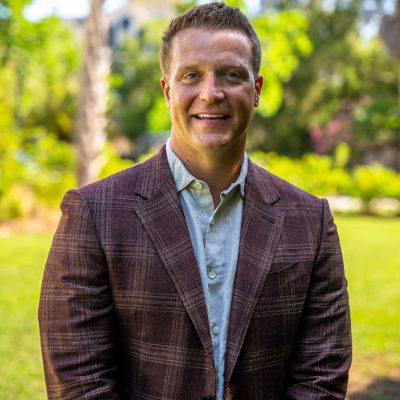
Caleb Pearson is the founder of Homebuyers SC and a licensed South Carolina real estate agent (License #83101) with 15+ years of real estate investing experience. He has personally been involved in over 500 purchases across South Carolina.